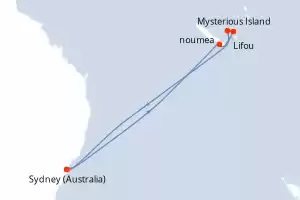
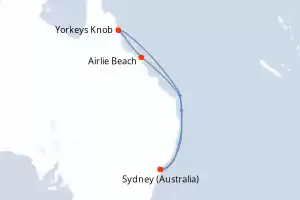
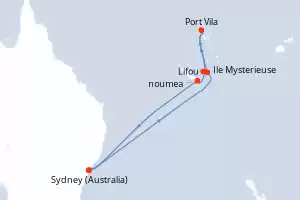
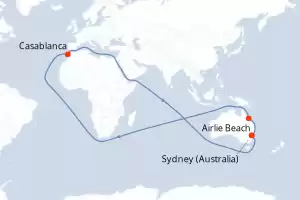
1 - The ship
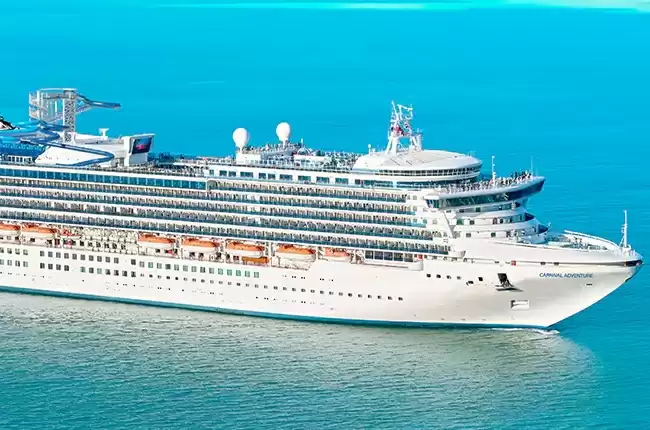
Capacity of about 2 636 guests (double occupancy), served by nearly 1 100 crew members, spread across 14 decks. Dimensions: approx. 290 m long and 36 m wide, with a gross tonnage of about 108 865 GT. The ship has around 1 316 staterooms.
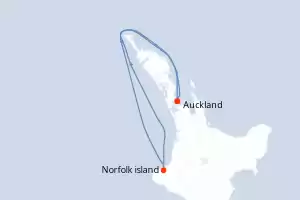
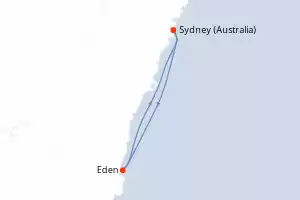
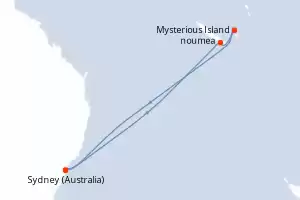
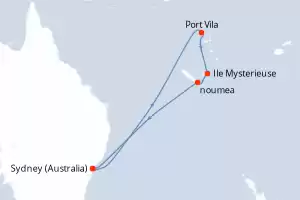
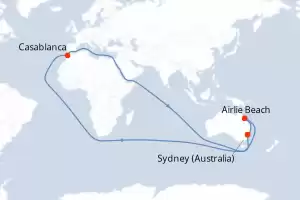
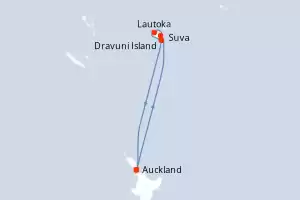
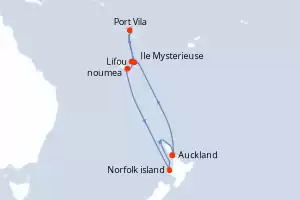
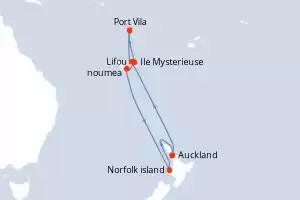
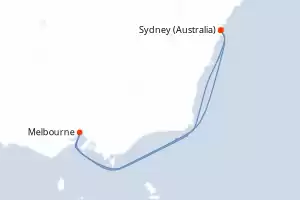
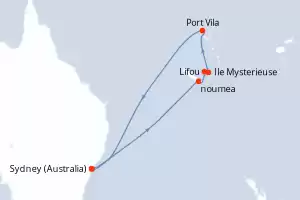
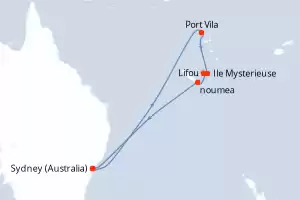
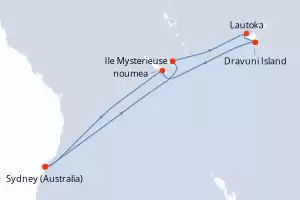
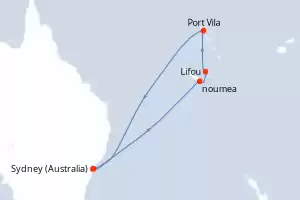
Departures are mainly from Sydney, with itineraries to the Great Barrier Reef, Tasmania, New Caledonia, Vanuatu, Fiji, and other South Pacific islands; a few sailings also depart from Melbourne and Singapore.
2 - Adult activities and entertainment
On board, you’ll find 4 pools, waterslides, and an outdoor Edge Adventure Park (thrill course, zipline/« flying fox », climbing, « walk the plank », etc.). Outdoor areas also include the adult-only Byron Beach Club (access restricted by stateroom category), with a pool and hot tubs.
For wellness, the Cloud 9 Spa offers treatments and a beauty salon, and a fitness center equipped with instructor-led classes rounds out the offering. In the evening, you’ll find Playlist Productions, the Punchliner Comedy Club, « Family Feud Live », as well as « Dive-In Movies » by the pool.
3 - Kids’ activities and entertainment
As on other Carnival ships, young guests have age-based clubs: Camp Ocean (ages 2–11), Circle C (12–14), and Club O2 (15–17), with games, workshops, parties, videos, and sports activities.
4 - Dining, bars, and lounges
Several restaurants (main and specialty) are open throughout the day, complemented by a wide selection of bars, a piano bar, and pool bars. Byron Beach Suites include private access to the Byron Beach Club (bar, pool, hot tubs, loungers) and dedicated perks (exclusive breakfast, priority embarkation, etc.).
5 - Accommodation
The ship offers interior, oceanview, balcony staterooms, and suites. Byron Beach Suites and some mini-suites include access to the private club mentioned above. In total, there are around 1 316 staterooms.
6 - Environment
Carnival produces the vast majority of fresh water consumed directly on board its ships: around 86–89% according to its recent reports. The company also highlights its « Less Left Over » strategy, with a 44% reduction in food waste per person (vs 2019) and a target of -50% by 2030.

 + 1 (786) 8400111